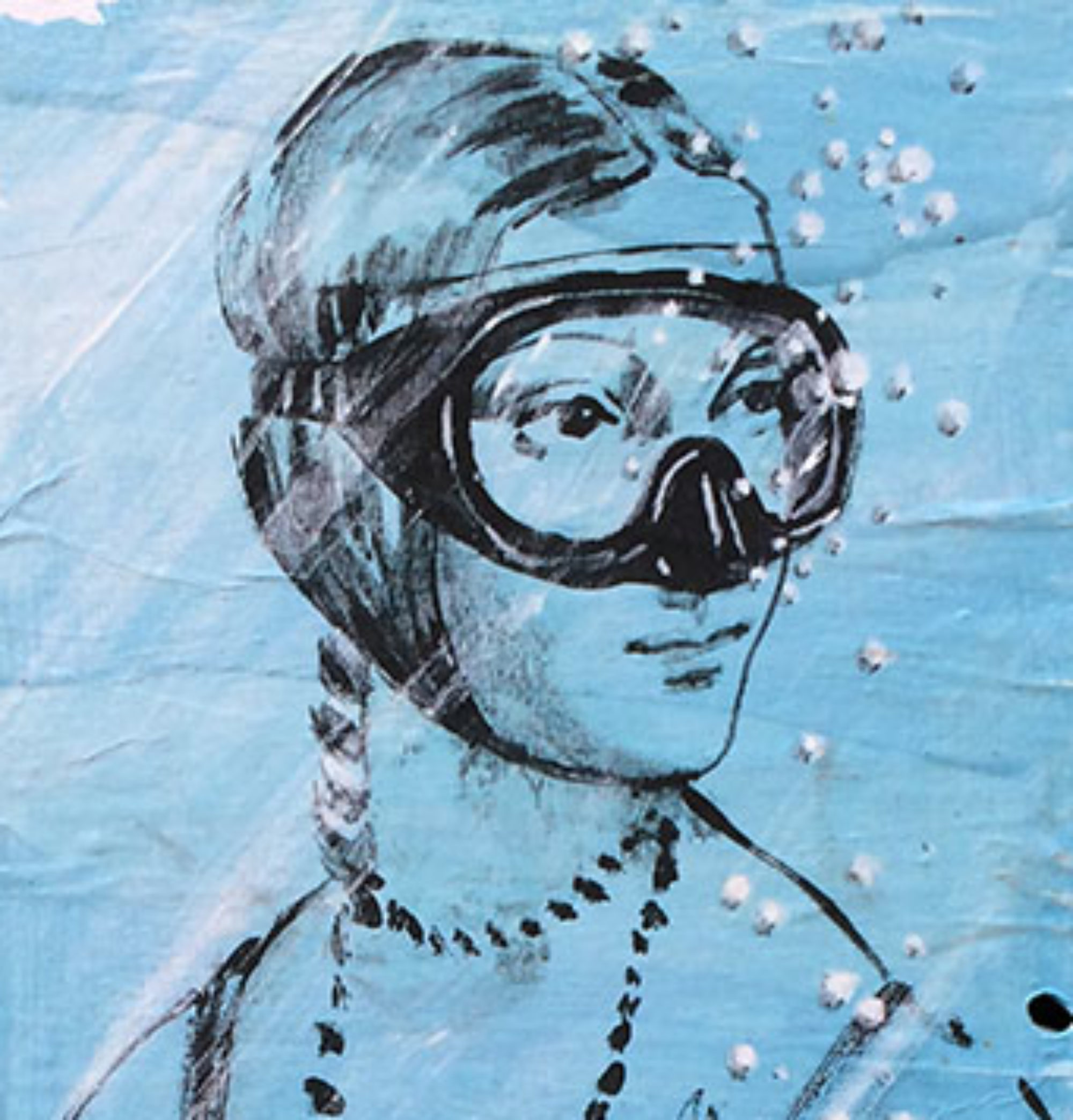
AICA, the Swedish Art Critics Association and KRO/KIF urge the Swedish Migration Board to let the asylum-seeking Armenian artist Narek Aghajanyan stay in Sweden. It is yet another case of a visual artist who risks expulsion and it shows that it is high time that the government takes a stand for offering cities of refuge also for visual artists.
Sweden has a history of standing up for the freedom of expression by showing solidarity with artists who have the courage to criticize repressive regimes. Narek Aghajanyan is one of those artists who have been harassed in their homeland because of their art and whose basic human rights are not respected.
Narek Aghajanyan fled Armenia for Sweden in 2010 and sought asylum. He had been threatened and manhandled, and his art had been destroyed. In Yerevan, Armenia, the authorities refused to let him arrange an exhibition in memory of the 10 protesters who were killed during the disturbances following the presidential elections of 2008. The Migration Court of Appeal has rejected his appeal and Narek Aghajanyan, his wife and daughter now face deportation.
Narek Aghajanyans fundamental human rights and his right to express himself through his art are under serious threat if he is forced out of Sweden. KRO/KIF find the decision of the Migration Board incomprehensible and believe it must be reconsidered, says Karin Willén who is president of the Swedish Artists National Organisation (KRO).
Today there are cities of refuge in Sweden only for writers, not for visual artists or musicians. The deportation decision in question shows yet again how the refugee policies fail to protect targeted free visual artists and their right to freedom of expression. KRO/KIF and the Swedish Art Critics Association therefore urge the government to take responsibility for establishing cities of refuge for persecuted artists in all forms of art. Naturally, our organizations will offer to contribute with knowledge and competence.
AICA (Association International des Critiques dArt) and the Swedish Art Critics Association appeal in a letter to several ministers in the Swedish government and to the Migration Board, to let Narek Aghajanyan stay in Sweden and freely practice his art.
KRO/KIF stand behind this letter. It is a given, as one of our main missions is to work for the freedom of expression and artistic freedom. If the government and the Migration Board find it justifiable to expel vulnerable artists to their native countries where they risk persecution, they are also taking part in censorship and repression, says KRO President Karin Willén.
Press contact:
Patrik Steorn, vice president of the Swedish Art Critics Association
patrik.steorn@gmail.com, mobile number +46 709797954
Karin Willén, president, KRO
karin@kro.se, mobile number +46 707407242
KRO/KIF, the Swedish Artists National Organisation is the Swedish visual artists interest group. KRO organizes artists with a higher education diploma or at least five years of professional experience. KRO works on national and regional levels and in local work groups. The Association of Swedish Craftsmen and Designers gathers artists and craftsmen who work with applied arts, i.e., who apply their artistic skills to specific materials. Together, KRO/KIF represent more than 3,300 Swedish visual and design artists.
www.kro.se
AICA, Association International des Critiques dArt/the International Association of Art Critics, is a global organization whose goal it is to support art criticism around the world, in all its forms and different genres. For AICA, the freedom of expression is an important principle and a fundamental civil right which must be defended. AICA was founded in 1948, is recognized as an NGO (non-governmental organization) by UNESCO since 1951 and today has over 4,600 members in 61 national and regional sections across the world.
www.aica-int.org
The Swedish Art Critics Association, the Swedish section of AICA, is a non-profit association that gathers professionally active art critics in all media, education or the curating of exhibitions. The members are primarily concerned with modern and contemporary art from all cultures; there are 262 members in the Swedish section. The mission of the association is to promote the understanding and critical interpretation of visual arts in all their histories and manifestations. An important goal is to impartially defend freedom of expression and thought, and to fight censorship.
www.aicasweden.org
AICAs letter: Narek Aghajanyan
It has been drawn to our attention that Narek Aghajanyan, an Armenian artist and political activist, who with his wife and daughter, has been a refugee in Sweden since 2010, has been declined permission by the Swedish Migration Board to remain living and working in Sweden.
We were informed by the Swedish section of AICA that Mr Aghajanyans 2010 exhibition in Yerevan, Armenia, which engaged with political and social issues, was hindered by the Armenian authorities and subsequently his artworks were destroyed. After being threatened and beaten, he and his family left the country for Sweden. Given the censorship and violent treatment he experienced in Armenia, a
course of events confirmed by his lawyer, he is understandably very concerned about returning to his country. We support Mr Aghajanans case to remain in Sweden where his civil rights will be assured more protection.
The International Association of Art Critics (AICA) is a global organization, established in 1948, comprising art critics who are anxious to improve international cooperation in the fields of artistic creativity, mediation and endeavour. AICA firmly believes that freedom of expression is an important principle and as a basic civil right must be defended.
A hallmark of a democracy is its willingness to allow, consider and withstand critical as well as benign points of view. As such it underlines the role and importance of art to engage with social and political issues in a free and open society. We feel it is our duty then to respond to and support cases such as that of Narek Aghajanyan and would therefore ask the Swedish Migration Board to reconsider its decision to deny Mr Aghajanyan and his family permission to remain in Sweden.
Marek Bartelik, President of AICA
Liam Kelly, Chair of AICA Commission on Censorship and Freedom of Expression
For web site, see: www.aica-int.org/spip.php?article1370 (accessed 15 October 2012)