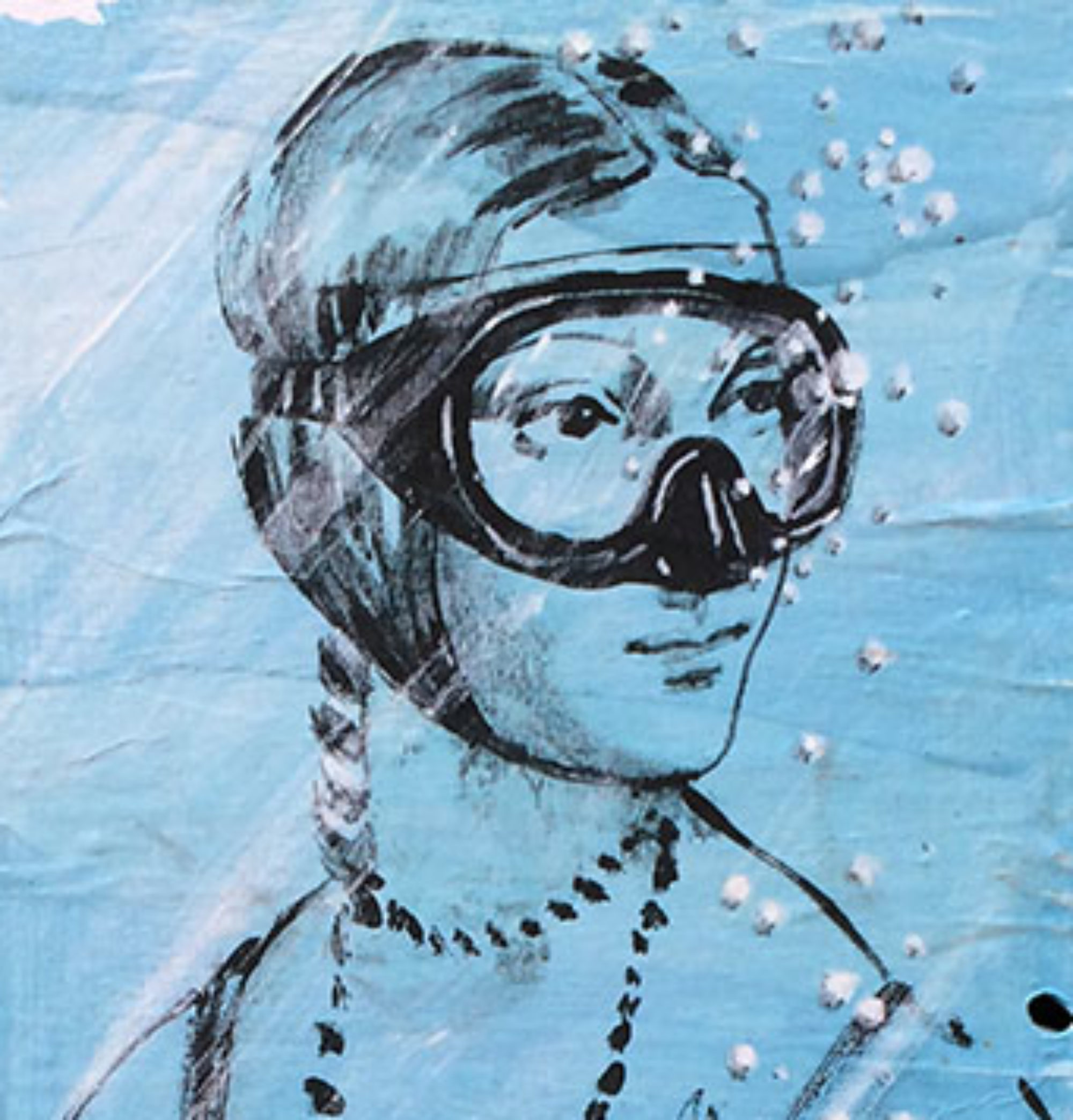
Rapport från AICA:s 57:e internationella kongress

AICA:s 57:e internationella kongress hölls i Johannesburg, Sydafrika, 27-31/10 2025

Deltagare från AICA Sweden: Birgitta Rubin, vice ordförande och rapportskribent, medlemmarna Dan Jönsson och Ulrika Stahre (även ledamot i AICA:s Censorship and freedom of expression committee ) och Christian Chambert, International Honorary Member i internationella AICA.

Årets internationella AICA-kongress gick av stapeln på University of Johannesburg, i FADA:s lokaler (fakulteten för konst, design och arkitektur). Sedan AICA:s grundande 1950 var detta bara andra gången som ett afrikanskt land var värd för kongressen, mer än 50 år efter första gången i Zaire 1973 och nu i samband med 30-årsjubiléet av apartheidregimens fall. 
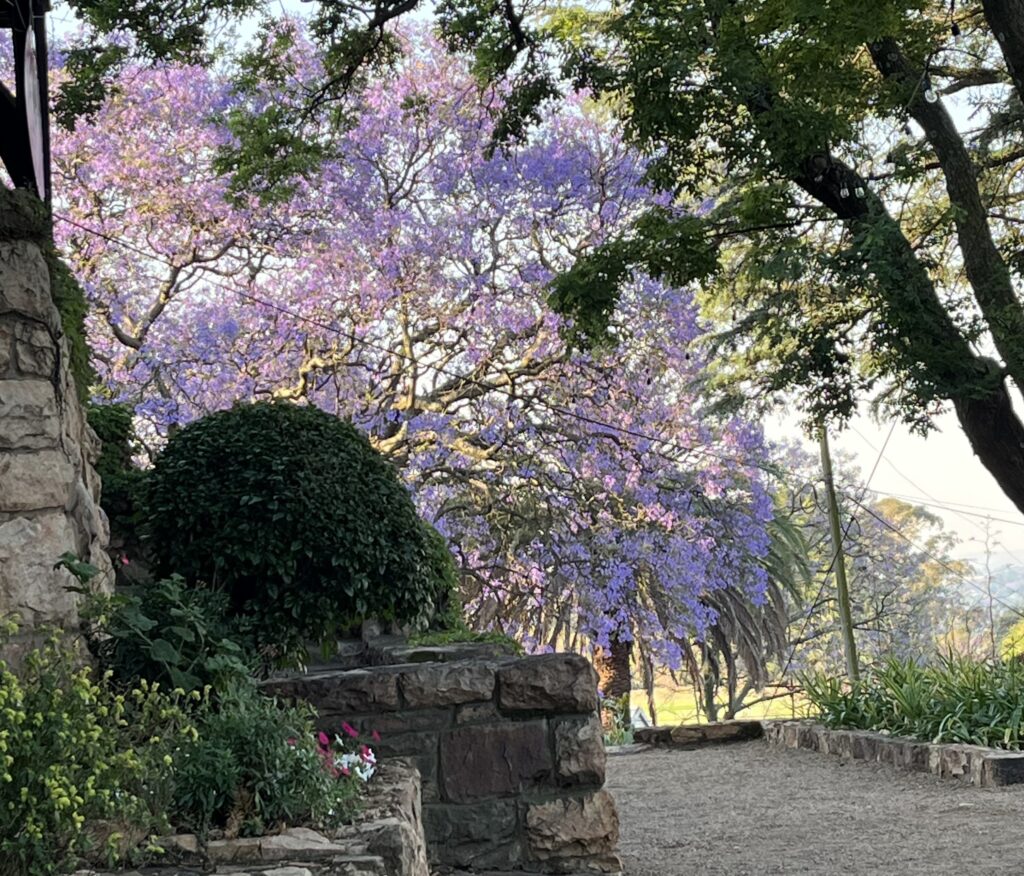
I oktober-november blommar jakarandaträden överallt i Johannesburg

Det borde ha borgat för ett stort intresse, då klimatet också är behagligt i oktober-november. Men Sydafrika har ingen egen sektion i AICA och som helhet var uppslutningen denna gång betydligt sämre än exempelvis häromåret i polska Krakow.

Främst berodde nog det begränsade antalet deltagare på att resan blev så lång och dyr för medlemmarna, de flesta bosatta i Europa och på den amerikanska kontinenten. Dessutom har Sydafrika rykte om sig att vara ett farligt land med hög brottslighet, i synnerhet i Johannesburg. Antalet våldtäkter i landet är högst i hela världen och enligt färsk statistik mördas i snitt 15 kvinnor om dagen.
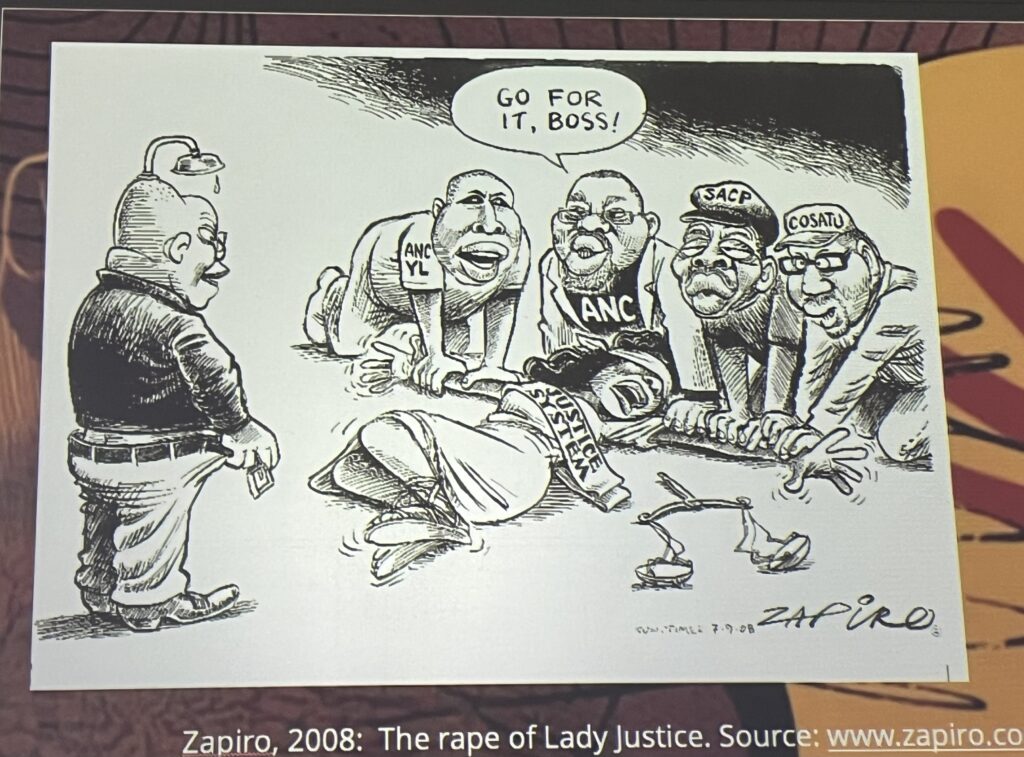
Satirteckning av Zapiro, från ett föredrag av Thelma Mort på kongressen

Mot bakgrund av detta enorma samhällsproblem var samarbetet med UNESCO i seminarierna ”Arts and women in Africa” under två av kongressens dagar både begripligt och angeläget. Kongressens tema ”Re-imagining the Global South: Art, Gender and Identity” gav också i stort en inriktning på kvinnors arbete för rättvisande representation och kamp mot patriarkala normer, våld och förtryck. 

Ett inledande föredrag av Fadzai Veronica Muchemwa från Zimbawe behandlade afrikanska kvinnors misrepresentation på museer och utställningar – dock med brasklappen att Afrika består av 56 länder med 3000 etniska grupper, med betydande inbördes skillnader. Konst av kenyanska Wangechi Mutu och Kudzanai-Violet Hwami uppväxt i Zimbabwe/Sydafrika visade hur kolonial och misogyn historia kan adresseras, det som tystats ner och osynliggjorts. 

Från öppningsanförandet av Fadzai Veronoca Muchemwa

Kvinnliga konstnärer, curatorer och konstvetare i Afrika arbetar i dag hårt för nya ramar och perspektiv, med hjälp av feministisk och dekolonial metodik.  

Många har djupdykt i de forna kolonialmakternas arkiv med etnografiska foton, där kvinnor exotiserades och objektifierades (för oss nordbor känt genom Frida Orupabos arbete). Den manliga blicken har sedan fortsatt att råda i nationalistiska nationsbyggen, där manligt hjältemod betonats medan kvinnligt deltagande länge förminskats eller utraderats.

”What are we still refusing to see?” är en återkommande fråga, liksom hur de historiska såren kan helas. Shonisani Netshia, Black women arts educator från Soweto, visade en symbolisk bild där hon förevigat en banan vars skal någon omsorgsfullt lagat med små stygn. 

Shonisani Netshias symboliska bild av en lagad banan

Thelma Mort, konstnär och föreläsare på University of South Africa i Pretoria, ägnade sin föreläsning åt hur våldtäktskulturen förhoppningsvis kan hämmas genom synliggörandet i samtidskonsten. Samtidigt är det ett deprimerande faktum att maktmän som den tidigare presidenten Jacob Zuma undkommit straff. 

På kongressen handlade flera programpunkter om hur kvinnliga konstnärer och formgivare i Afrika numera samarbetar genom social aktivism och i kollektiv. Såväl stat som fäder och äkta män kan fortfarande begränsa möjligheter till utbildning, att skapa fritt, ställa ut och försörja sig på konstnärligt arbete.

Konstnären och curatorn Georgina Maxim från Zimbabwe höll ett inspirerande föredrag om sitt arbete med ett konstnärsdrivet residensprogram i Harare, Village Unhu, där unga kvinnor kan bo, arbeta och ställa ut. I sin egen konst återanvänder hon textilier och i ett efterföljande panelsamtal var det flera i publiken som vittnade om hur väl de känner igen de vita, virkade dukar som många kvinnor i Zimbabwe försörjt sig på. Ett tidskrävande handarbete, uppenbarligen med global spridning, som nuförtiden ligger i drivor på europeiska loppisar.
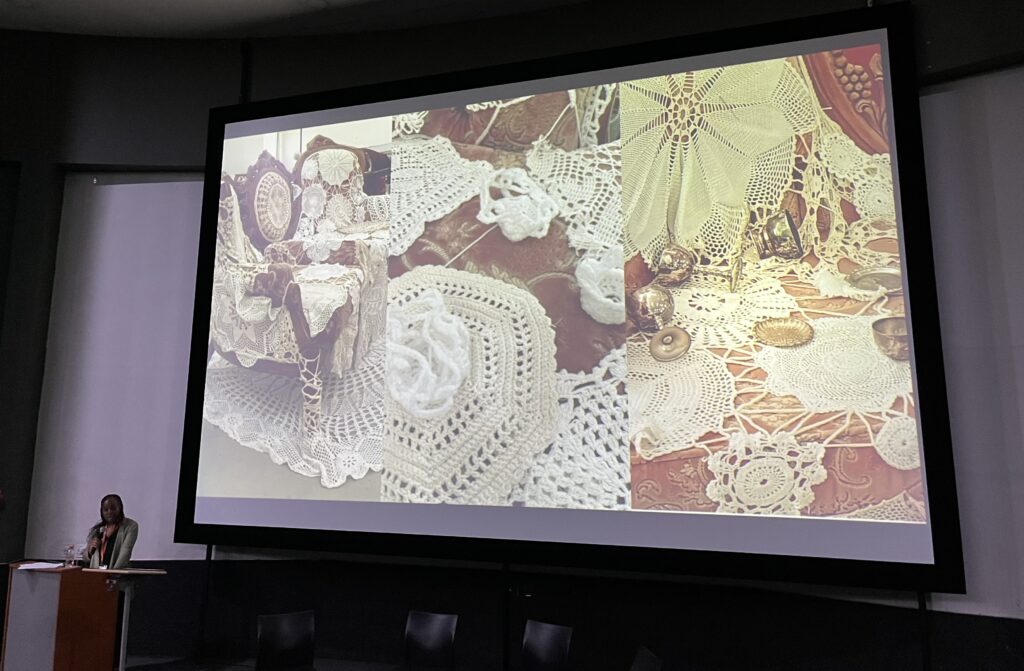
Virkade dukar som länge var en viktig inkomstkälla för kvinnor i Zimbabwe

Flera talare beskrev ingående sitt konstnärliga arbete, som nog för de flesta europeer och amerikaner påminde starkt om hur 70-talets feminister arbetade i västvärlden. Samtidigt kändes det hoppfullt att utvecklingen går starkt framåt. Sydafrika har nu ett flertal internationellt uppmärksammade konstnärer som är kvinnor, däribland Mary Sibande som kongressarrangörerna en kväll ordnade ett uppskattat ateljébesök till. 

Att Sydafrika har en livlig HBTQI-scen med kända namn som Zanele Muholi, bosatt i Johannesburg, berördes dock inte. Synnerligen glädjande var däremot berättelsen om Javett art center, med en konstsamling uppbyggd av den vita sydafrikanen Michael Javett. 2017 fick den kvinnliga konstnären Bongi Dhlomo fria händer att köpa in verk av andra svarta konstnärer – ett unikt initiativ för en mer rättvisande bild av den sydafrikanska 1900-talskonsten. 

Det som saknades på kongressen var föreläsningar om det sydafrikanska konstlivet i stort, vi fick bara glimtvis insyn i just representationsfrågor och utmaningar som bristande museianslag, konststölder och de djupa såren efter den brutala apartheidregimen. Tyvärr var det också fler av oss deltagare som hade problem med att höra och förstå talarna. Detta trots att alla pratade engelska – dock de flesta med svårbegriplig brytning eller dialekt. Andra närmast viskade alternativt läste innantill i rekordfart. 

Bättre tekniska lösningar hade relativt enkelt kunnat lösa problemen, om inte annat så genom att talarna delar sina presentationer på AICA:s hemsida. En länk till kortfattade abstracts delades visserligen före kongressen, men flera talare dök aldrig upp, medan andra tillkom. 

AICA:s medlemmar är till övervägande del akademiker, curatorer eller museianställda och bara en mindre del är verksamma som konstkritiker. Denna gång handlade beklagligt nog inte ett enda föredrag om konstkritik, ett minst sagt angeläget ämne för professionen när konstkritiken som nu är hotad eller redan obefintlig på många ställen.

En fin artist’s book på Wits Art Museum

Kongressen i Johannesburg avslutades med en utflyktsdag. Det blev ett minnesvärt besök på Wits art museum i Johannesburg (med bland annat en unik samling artist’s books) och även på nämnda Javett art center i Pretoria. Besöket på den kända skulpturparken Nirox utanför Johannesburg blev dock alldeles för kort – särskilt trist då flera svenskar deltar i den hyperaktuella utställningen ”Soil & Water”; Maria Lantz med fotobaserade pusselbilder, Lundahl & Seitl med ett videoverk i serien ”River biographies” och Jonatan Habib Engqvist med en text. 

De flesta kongressdeltagarna reste på egen hand till Kapstaden, omgivet av ett majestätiskt bergslandskap, rikt djurliv och frodigt vindistrikt, jämte fina restauranger och museer i staden. Där erbjöds starka upplevelser, främst på  Zietz MOCCA, som 2017 öppnade i en mäktig, ombyggd silo nära Kapstadens waterfront. Museets bas är tysken Jochen Zeitz konstsamling, varur flera verk av queera konstnärer som nämnda Zanele Muholi visas denna säsong. 

Andra utställningar på museet borrar i trauman från apartheidåren, däribland erfarenheter av tvångsarbete och påtvingade förflyttningar inom landet, vilket bland annat Gerard Sekoto skildrat.
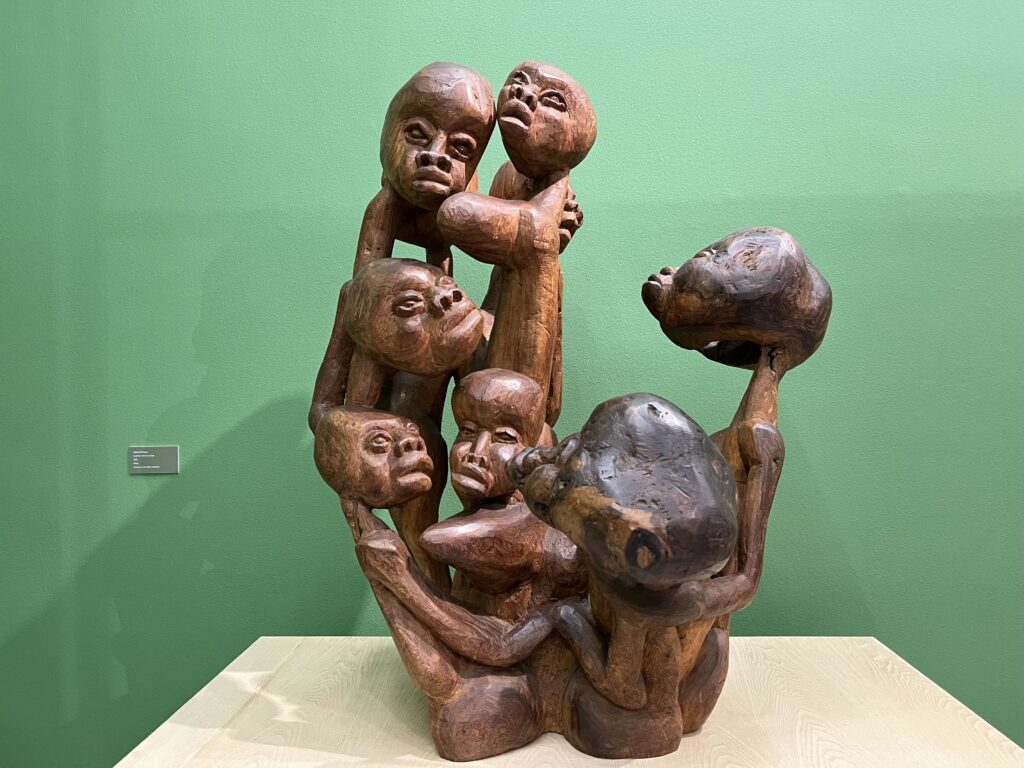
Skulptur av Alberto Chissano i Albie collection på Zeitz museum

Den vita advokaten och människorättsaktivisten Albie Sachs, som hade en avgörande roll för Sydafrikas progressiva konstitution postapartheid, har i år fyllt 90 år. Hans engagemang i flera konstsamlingar framgår också av hyllningsutställningen ”Spring is rebellious”, som initierades av Koyo Kouoh

Hon var chefsintendent på Zeitz MOCCA och skapare även av utställningen ”When we see us”, med figurativt måleri av svarta konstnärer från det senaste seklet. Liljevalchs i Stockholm visar just nu denna hyllade vandringsutställning, som ledde till att Koyo Kouoh blev utsedd till konstnärlig ledare för Venedigbiennalen 2026.

Men sorgligt nog avled hon i våras och på AICA:s kongress hedrades Koyo Kouch postumt med årets Award for distinguished critic.

Nästa års kongress hålls i Frankrike, i Rennes.

Text & foton Birgitta Rubin
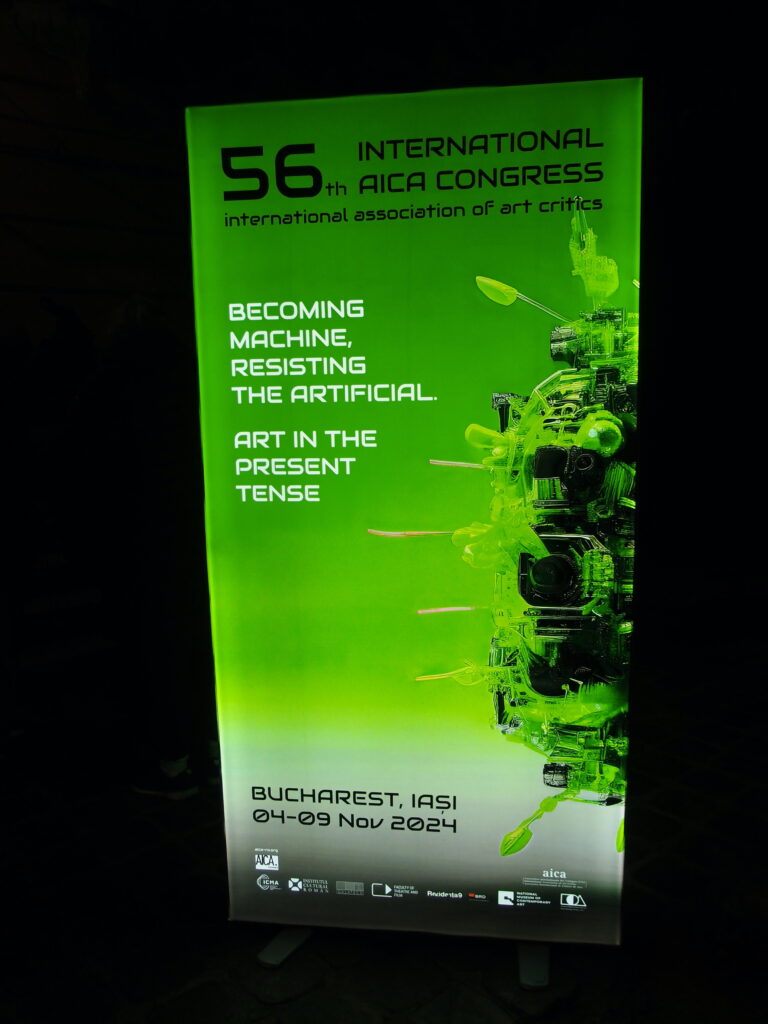
Report from the AICA Congress Romania, 4–9/11 2024  (scroll down for Swedish version)

Congressposter

Participating from Sweden: Christian Chambert, board member and honorary member of AICA International; interim member of AICA’s Congress Committee until 2024. 

The theme of the annual AICA Congress in 2024, the 56th to date, was highly current and controversial. Recent changes in the digital world were commented from a variety of artistic, theoretical and social perspectives. Three packed days in Bucharest were followed by two days (including travel) in Iaşi. Throughout the week, we made stimulating visits to several exhibitions. According to the ambitious programme, there were some fifty lectures, which is more than usual. The lecturers came from twenty or so countries, mainly European. Information was distributed rather late, which is partly why only some eighty of the organisation’s more than 5,000 members attended.  

The Congress First Part: MNAC in Bucharest 
The Congress took place at the National Museum of Contemporary Art in Bucharest (MNAC) and the “George Enescu” National University of Arts in Iași. The theme was Becoming Machine, Resisting the Artificial. Art in the Present Tense. The programme is available on AICA International’s website. The Congress was hosted by AICA Romania under the directorship of its chairman Horea Avram and his team.  

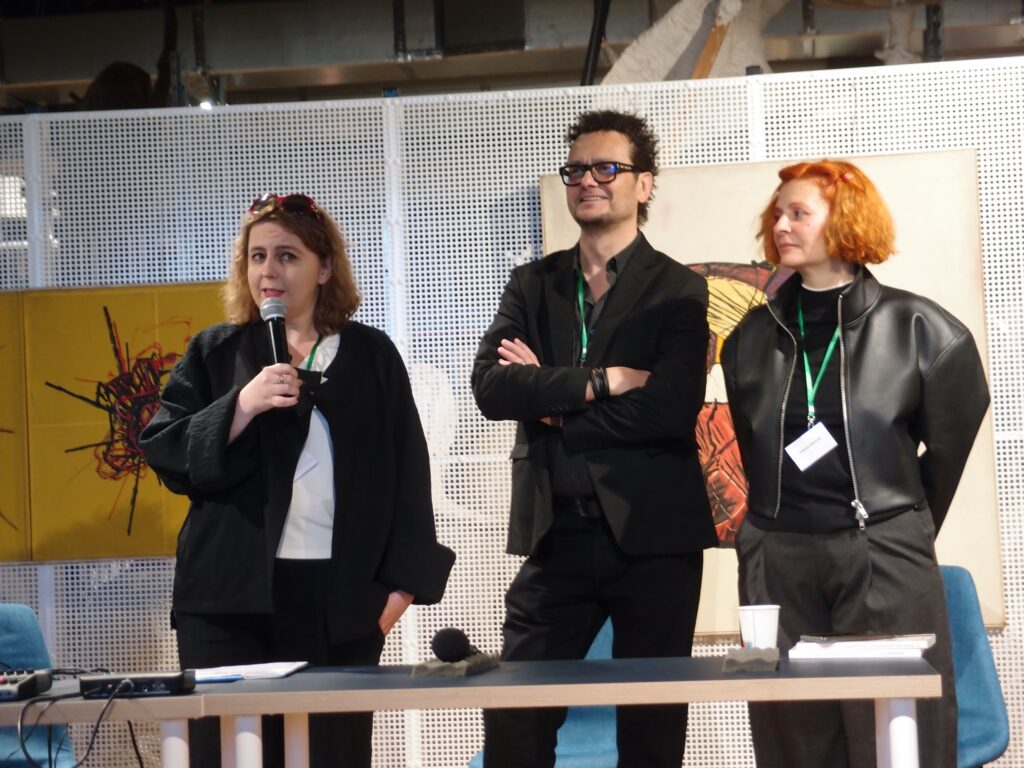
Małgorzata Kaźmierczak, AICA President, Horea Avram, President AICA Romania and Raluca Oancea, member of the organizing committee. Photo from MNAC in Bucharest 

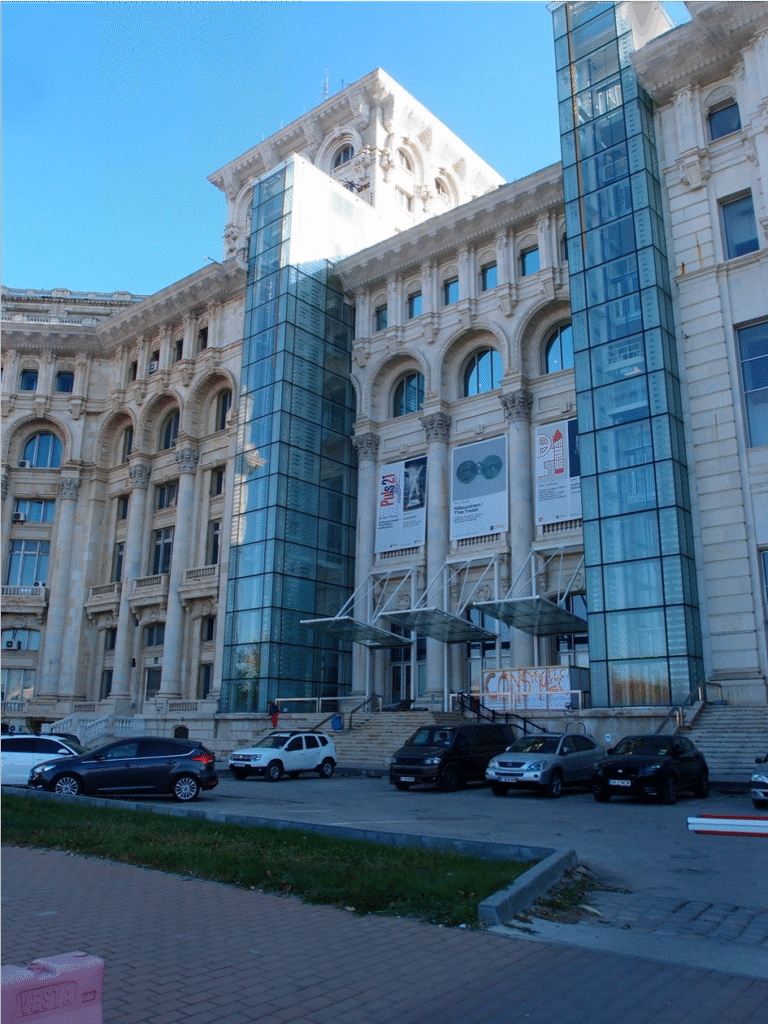
The MNAC is located in the Parliamentary Palace commissioned by the former president Nicolae Ceaușescu. It was designed in a late-neoclassical style and was almost completed in 1997. It is one of the world’s largest administrative buildings. The palace with its sumptuous halls was built in a period when poverty and food shortages were part of everyday life for many Romanians. 

The Palace of Parliament in Bucharest with two external elevators leading to the lecture halls and the MNAC exhibitions. 

Several lectures at the MNAC were held two at a time in separate auditoriums on different floors, accessed by two lifts on the exterior wall. Physically, it was only possible to listen to little more than half of the presentations. Therefore, it was excellent that CVs and abstracts could be downloaded from the website, to get an overview. Lunch was served next to the meeting rooms, saving participants the bother of looking for restaurants with free tables. This was congenial to social networking and efficient programming. 

Some of the issues and comments discussed over these intense days: What is the impact of the digital ecosystem in a world dominated by military conflicts, climate change, migration crises, fake news and political turbulence? The traditional roles of institutions have been disrupted. Can we trust the archives that are built today, when more and more data are fake? How do NFTs influence the international art market? In what way does the virtual museum democratise the cultural heritage? Do immersive media contribute to a deeper understanding of the contemporary world? How are viewers affected by digital behaviours? 

In internet art, the creative activity has partly been surrendered to machines. The borders of human creativity have been blurred. We readily identify ourselves with computer images even though we often resist the artificial versions. What is the potential of AI in contemporary art? The encounter between individual and computer offers a new angle on the old questions of artistic originality, authorship, ownership, ethics, monetary value and copyright. How does art criticism change when artists use new technological tools? What knowledge and what language are needed to write about AI-generated art? 

Nearly a century ago, Walter Benjamin argued in Das Kunstwerk im Zeitalter seiner technischen Reproduzierbarkeit (1936) that mechanical reproduction depletes the aura of the work of art and shifts the focus to politics. With this as her starting point, Sofia Maia Ciel from Norway examines how today’s rapid digitisation, the emergence of artificial intelligence, growing inequality and accelerating capitalism affect the mental health of artists and art critics, many of whom have precarious livelihoods. Title: Health, Accessibility, and Care in the Age of Digital Reproduction. Ciel has doctored in philosophy and has contributed to several publications, including Kunstkritikk and Hyperallergic

A sub-theme at the Congress was biennials. Kimmo Sarje, artist, critic, curator and associated professor emeritus in aesthetics at Helsinki University, lectured on Art Biennials and their Relevance Today: Venice Biennale 2024 as a Case. It is still important to experience works of art in their materiality at well-organised biennials, despite the image flow on the internet. 

The Award Ceremonies 
Ileana Pintilie, a specialist in performance art, received the AICA Distinguished Prize. This accolade relates to lifetime achievement and is awarded to a critic whom the hosting nation considers to be the most deserving. Pintilie is an art critic, curator and professor at the West University of Timișoara in western Romania. Her CV includes a substantial list of publications of essays and monographs. 

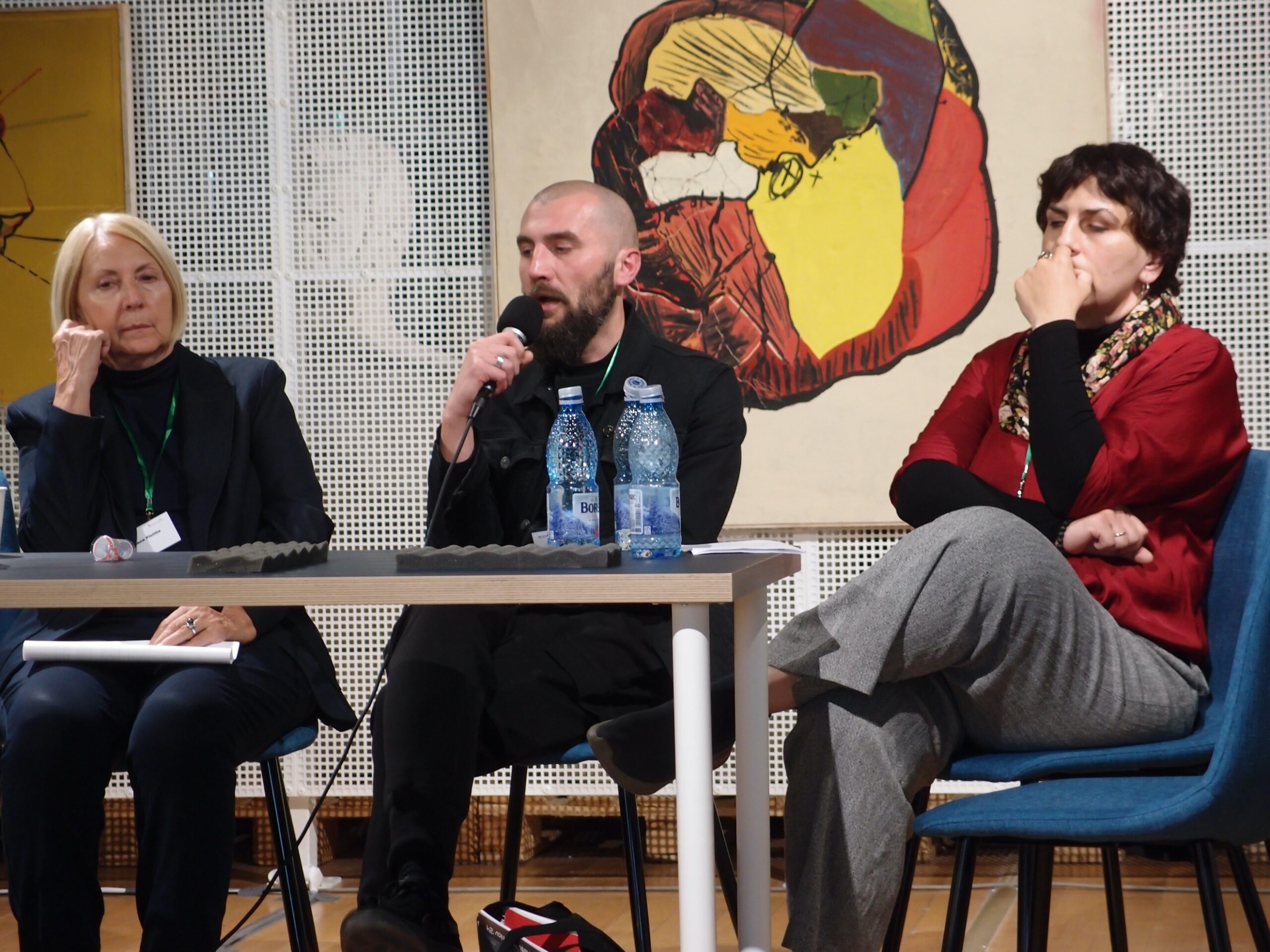
Ileana Pintilie received the AICA Distinguished Prize, Jurij Dobriakov, President AICA Lithuania and Kata Balázs-Miklós, President AICA Hungary. Round table at MNAC, Becoming Freedom. Performance Art in the ‘1990s

The Incentive Prize for Young Art Critics 2024 was awarded to German-Swedish Linnéa Bake (first prize). Texts by the first, second and third prize recipients are published on the AICA website. Jean Bundy, AICA USA, chairman of the Awards Committee, presented the jury’s choice of winners. 

The General Assembly  
Session 1 of the General Assembly was held in a hybrid format at the MNAC on 6 November and was devoted to information and discussion. The meeting was led by the newly-appointed AICA president, Małgorzata Kaźmierczak from Poland. Session 2, where decisions were made, was held online on 13 December after our return home.  

AICA’s third Extraordinary Congress took place in 1973 in Kinshasa in what is now the Democratic Republic of Congo. The next congress will be in Johannesburg, South Africa, on 27–31 October 2025, thanks to a substantial financial contribution from UNESCO. After more than 50 years, the time has come for AICA to revisit Africa with a major project. 

Exhibitions in Bucharest  
The director of the MNAC, Călin Dan, guided us round the exhibitions at the Museum. The Twist. Failing Empires, Triumphant Provinces is an unconventional collection of archaeological artefacts, applied arts and apparel, and ethnographic and industrially mass-produced objects. Together, they generate meaningful dialogues with contemporary works of art. The Twist juxtaposes materials from five millennia of spiritual and material culture in a region roughly corresponding to the Romania of today. 

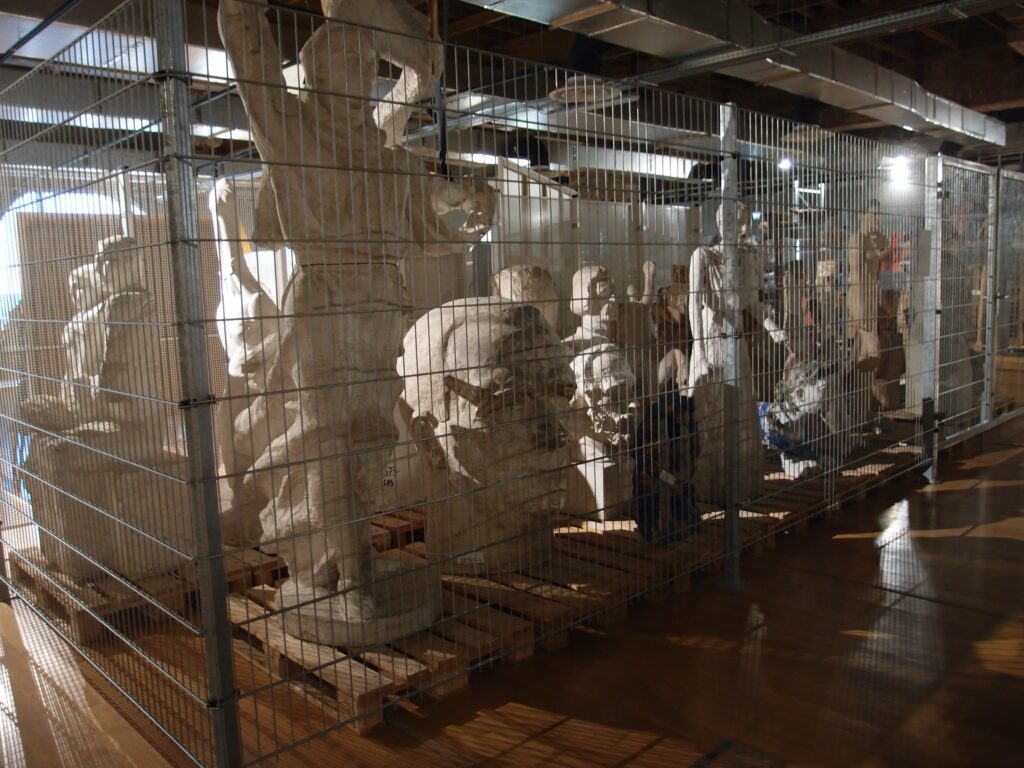
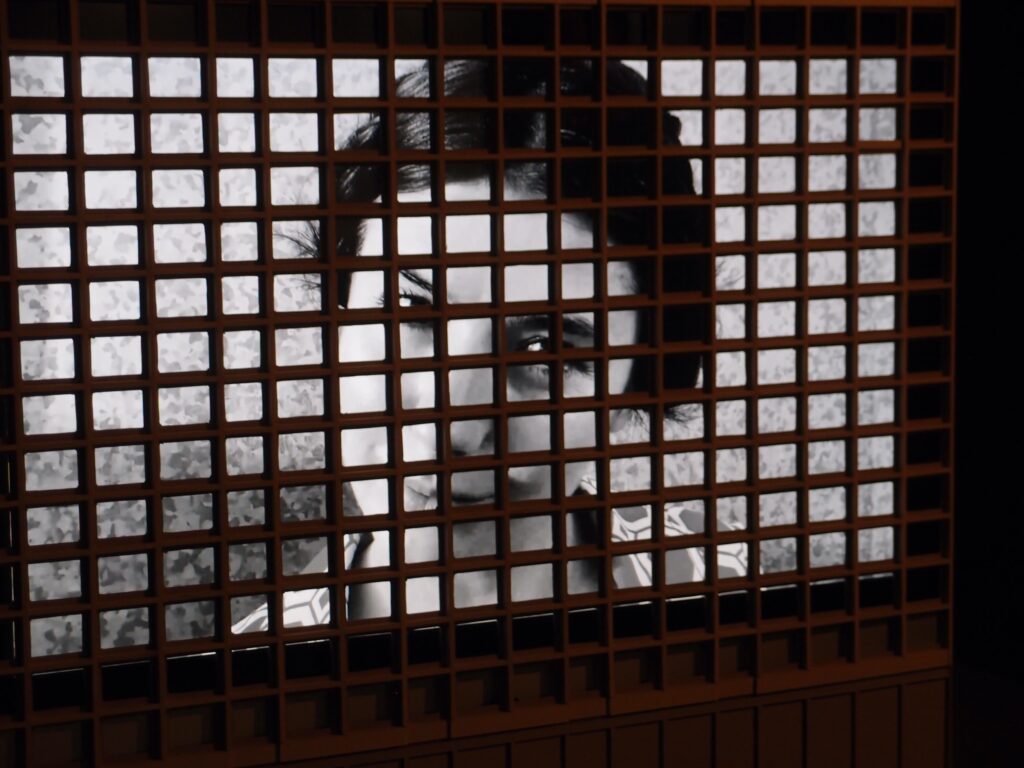
The permanent exhibition Leviathan. In the Guts of the Collection at the MNAC invites the public to its labyrinthine museum storage, with an eclectic sculpture collection shown behind screens of transparent galvanised metal mesh. 

Exhibition view from Leviathan. In the Guts of the Collection at MNAC in Bucharest 

In the exhibition Being Nina at the MNAC, Romanian Adina Mocanu (b. 1990) shows multi-channel video works reflecting the artist’s research into alternative universes, the extraterrestrial and The Other. The work is about Nina Kulagina, a housewife in the former Soviet Union, who became famous for her telekinetic abilities.  

Adina Mocanu’s exhibition Being Nina at MNAC in Bucharest 

We were also given a preview of the exhibition Dissonance at the National Museum of Art (MNAR), featuring 43 international artists born after 1972 and currently working in Germany, co-produced with Künstlerhaus Bethanien in Berlin. The participants also visited several art galleries together: Rezidența9, Galateca Gallery and CAV (Centre for Multimedia Visual Arts).  

The second part of the Congress: Iaşi 
The second part of the Congress was held in Iaşi in north-eastern Romania, near the border to Moldova. This is Romania’s second-largest city, with a population of 318,000 (2025). Iaşi was once the capital of the old principality of Moldavia, and later of Romania for a short period. The many grand public buildings reveal the city’s glorious past. 

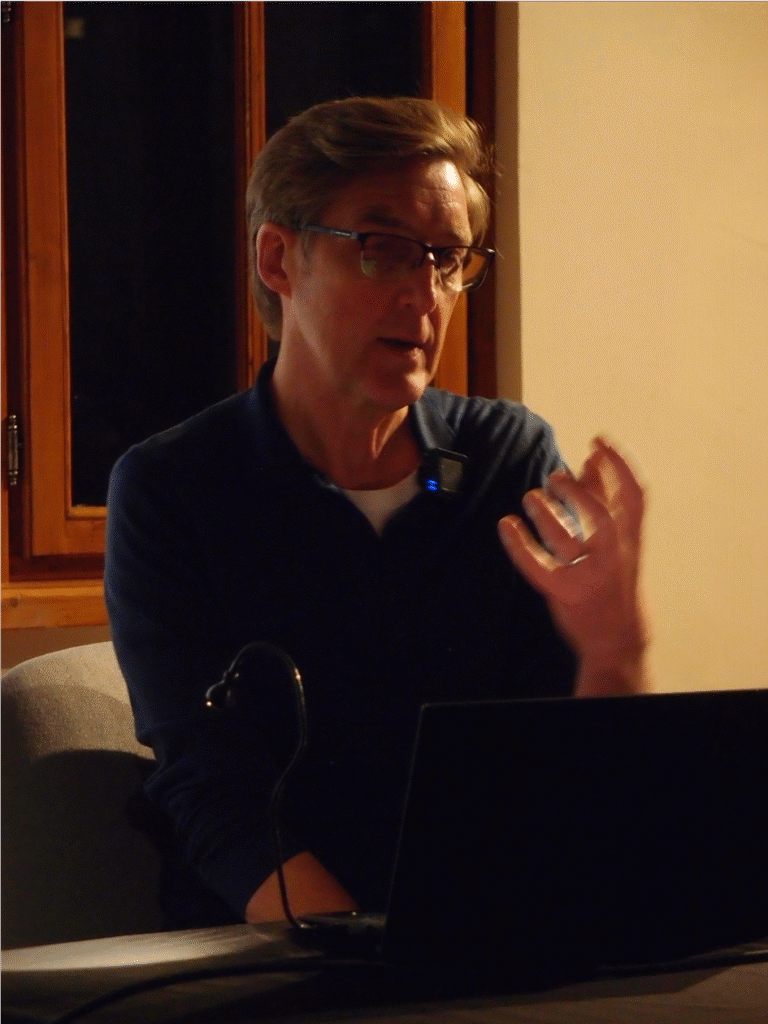
Paul O’Kane, artist, writer and senior lecturer in art and culture at Central Saint Martins, University of the Arts in London, was one of three keynote speakers. In Technologies of Romance, he claims that modernity developed faster than expected, quickly slipped out of control, encompassing a plethora and so many novelties that consequently became obsolete all too soon. Therefore, he argues that it is pointless to discuss whether artificial intelligence (AI) can or should grow beyond what we can master. The primary characteristic of all technologies must be to transcend ourselves and our control and constantly expand our abilities. The artist plays a special role in applying, experimenting and assisting us to adapt to new technology.  

Paul O’Kane, key note speaker from London, lectures on Technologies of Romance at “George Enescu” National University of Arts in Iaşi. 

Exhibitions in Iaşi 
We visited the art museum at the Palace of Culture. This mighty neo-gothic building from 1906–1925 was formerly the Palace of Justice. It also houses the historical and ethnographic museums and the museum of science and technology. 

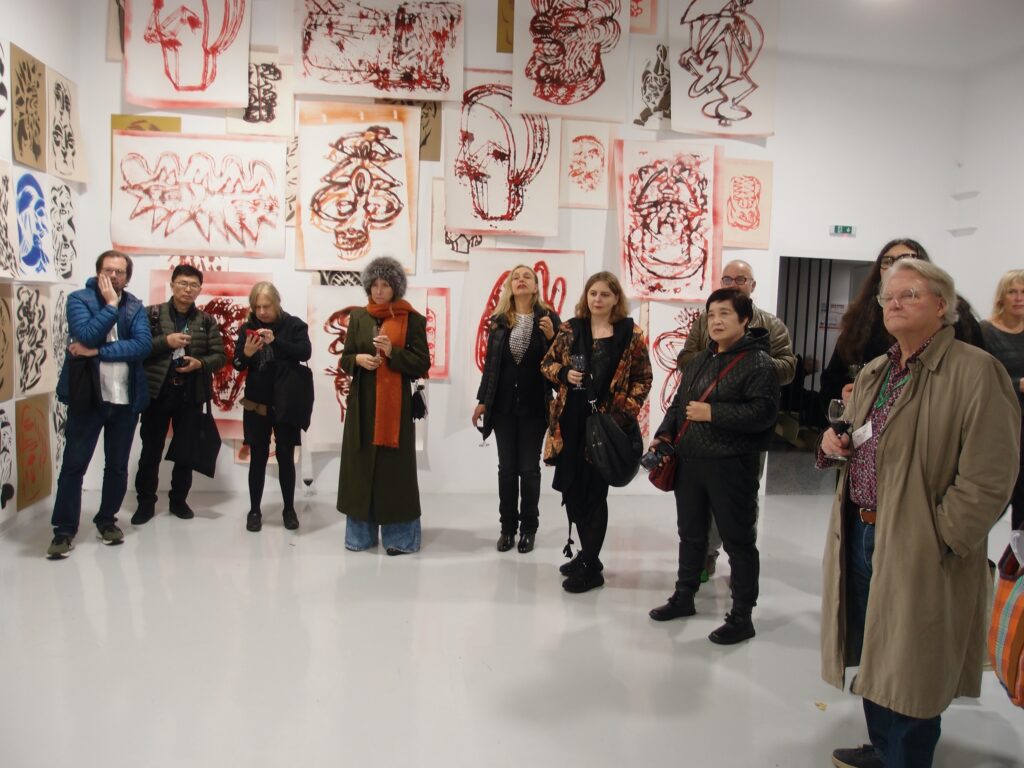
Under the title of These are not drawings the Romanian artist Dumitru Gorzo (b. 1975) filled the walls of Borderline Art Space with hundreds of stencilled pictures of anthropomorphic beasts.  

View from Dumitru Gorzo’s exhibition at Borderline Art Space in Iaşi These are not drawings. Kimmo Sarje, professor emeritus, AICA Finland, on the far right 

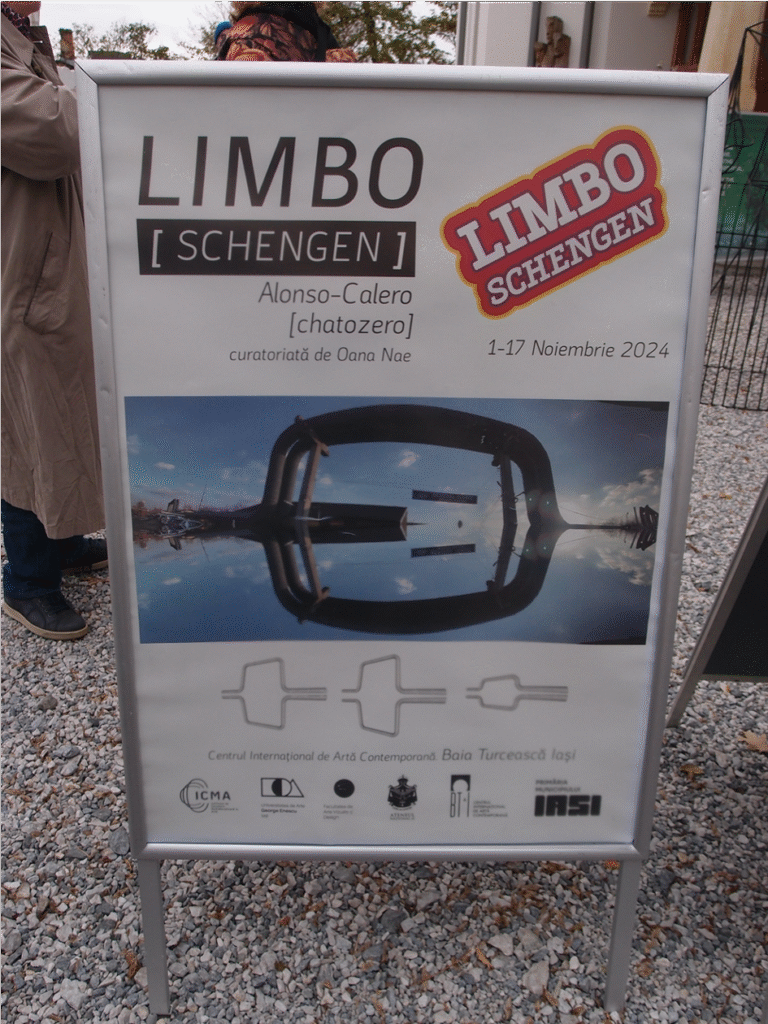
At CIAC Baia Turcească, the Spanish artist Alonso Calero (ChatoZero) (b. 1969) presented his utopian project Limbo [Schengen], where borders will no longer be drawn according to political and economic circumstances but will be flexible structures adapted to demographics and climate.  

Poster for Alonso Calero’s (ChatoZero) exhibition Limbo [Schengen] at CIAC Baia Turcească in Iaşi 

The exhibition Domestic at Artep Gallery featured several videos with narratives from Romania, Serbia and Croatia. The project highlights aspects of women’s lives that are often invisible in public, such as depression and anxiety.  

Had the lectures, round-table discussions and Q&A sessions been uploaded as webinars, it would have been possible to listen to all speakers afterwards, and to refer back to the most engaging presentations. This would also have made interesting lectures available to many more than the circle of those present. This was not the case. The organisers have promised, however, to publish selected lectures in an edited version. 

Christian Chambert   AICA International Honorary Member 

Translation by Gabriella Berggren 

All photos: Christian Chambert